Guide · HVAC growth
How to Grow an HVAC Business
Grow an HVAC business by building steady income first: sell maintenance agreements, answer and quote fast, and collect payment on the spot. Then raise your average job with clear options, protect your schedule, and ask every happy customer for a review.
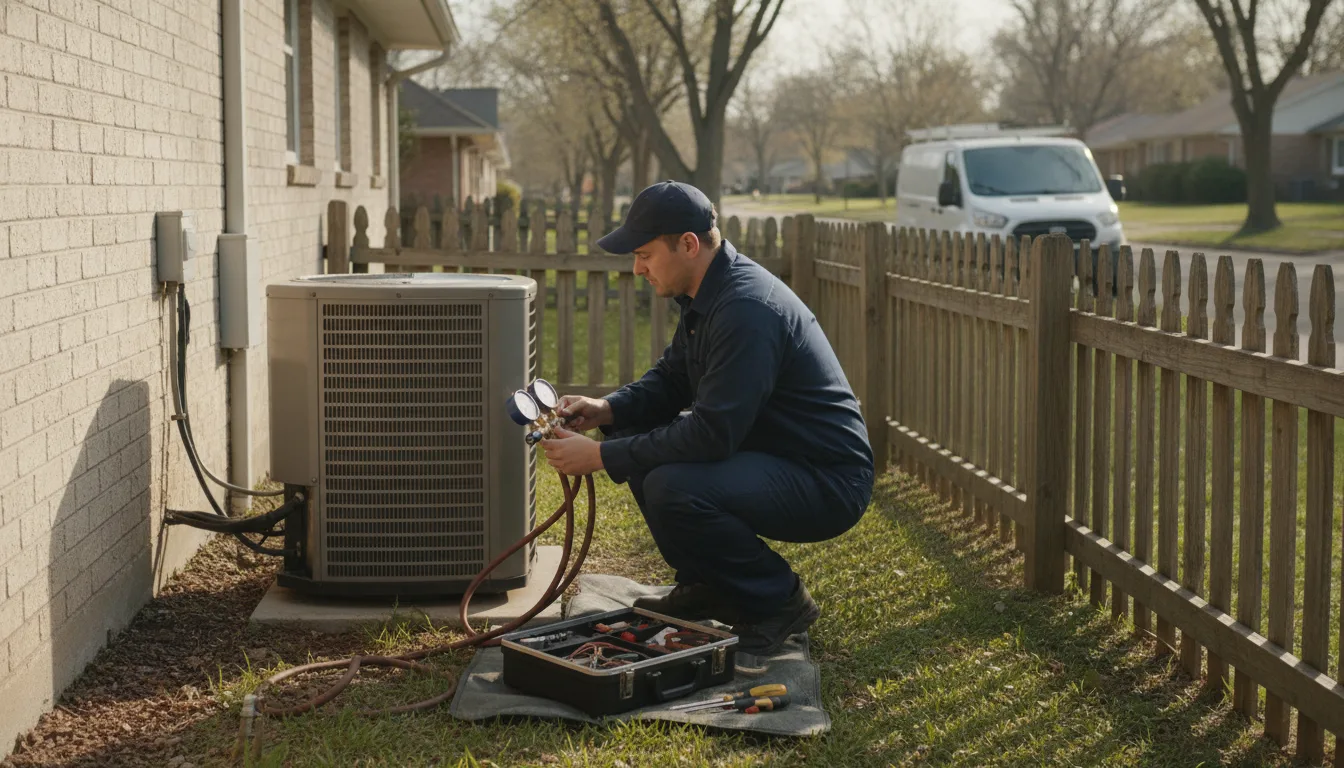
Build steady income with maintenance agreements
HVAC work comes in waves. Hot weeks and cold snaps fill your calendar, then spring and fall go quiet. The fastest way to smooth that out is a maintenance agreement: a set number of tune-ups per year for a fixed fee, billed on a schedule.
Start small. Pick one plan, such as a spring AC check and a fall furnace check. Write down exactly what each visit covers: filter, coils, drain line, electrical connections, airflow, safety controls. Price it by working out your real cost per visit, including drive time, then add a fair margin. Prices vary a lot by market, so look at what local companies charge before you set yours.
Offer the plan at the end of every install and every repair. A customer who just had a good experience is the easiest person to sign. Recurring jobs and autopay make renewals simple, because the visit gets booked and the card gets charged without you chasing anyone. Each agreement also puts a tech in the home twice a year, which is when you spot worn parts and aging equipment before they fail.
Answer fast and quote clearly
Most homeowners with a dead AC call two or three companies. The one that picks up, or calls back within minutes, often gets the job. If you are on a roof or in an attic, set up a voicemail message that says when you will call back, and then do it. Missed calls are lost jobs.
Once you are on site, give a written estimate the customer can read and understand. List the equipment model, what is included, what is not, the timeline, and the total. Plain language beats trade jargon. If you need help with the structure, see our guide on how to write a contractor estimate that wins the job.
Send the quote the same day, ideally before you leave the driveway. A quote that arrives three days later competes with every other contractor who answered faster.
Give customers options on replacement jobs
When a system is near the end of its life, do not hand over one price and hope. Offer three options: a basic unit that solves the problem, a mid-range unit with better efficiency or comfort, and a premium unit with the features that matter most. Explain the difference in running cost, noise, warranty terms from the manufacturer, and comfort.
Options help in two ways. Customers feel in control, so they are less likely to shop around just to feel safe. And many will pick the middle choice, which raises your average job without any pressure.
Add-ons belong in the proposal too: a smart thermostat, air purifier, duct sealing, a surge protector, a better filter rack. If you find extra work after you open things up, such as damaged ductwork or a wiring problem, put it in writing as a change order and get approval before you continue. That protects your margin and avoids arguments at the final invoice.
Keep the schedule tight and the trucks productive
Growth stalls when techs spend the day driving across town. Group jobs by area. Put tune-ups near emergency calls when you can. Leave a buffer for the repair that runs long, and tell the next customer early if you are behind.
A shared schedule that every tech can see cuts down on phone calls and double bookings. Customers also like an arrival window and a reminder text. Vehicle tracking helps the office answer the question where is my tech without calling the driver, and it helps you dispatch the closest truck to a new emergency.
Before you add services or a second crew, check your local and state rules on licensing, permits, and refrigerant handling. Rules vary by state and city, and you should confirm what applies to your work.
Get paid faster
Cash flow limits growth more than demand does. If you wait weeks for checks, you cannot afford the next truck, the next hire, or the next equipment order.
Send the invoice from the job site and let customers pay online by card or bank transfer. Card payments are convenient, but processing fees differ between providers and between card and bank payments, so compare the actual rates before choosing. For large installs, bill in stages: a deposit to order equipment, a payment when the unit is set, and a final payment at startup. Progress billing keeps your money out of the customer's pocket until the job is done.
A customer portal where people can see their estimate, invoice, and payment history means fewer who-has-the-paperwork calls to your office.
Earn reviews and show up in local search
Most people search for HVAC help on their phone, and they pick from the companies near them with good reviews. Claim and fill out your Google Business Profile with your service area, hours, and services. Add real photos of your own installs and trucks.
Ask for a review the same day the job finishes, while the cool air is fresh in their mind. Send a direct link by text. Reply to every review, good or bad, in a calm and professional way.
If you have a website, make sure it lists your services, service area, license number if your state requires one, and a simple way to request a quote. A free WordPress plugin can put an estimate request form on your site so leads go straight into your workflow instead of a stray inbox.
Questions people ask
How do I get more HVAC customers?
Start with fast response and a complete Google Business Profile. Answer calls quickly, send quotes the same day, and ask every satisfied customer for a review. Then add maintenance agreements so existing customers keep booking you twice a year. Referrals from happy customers and local real estate or property management contacts also bring steady work, and they cost far less than ads.
How much should I charge for an HVAC maintenance agreement?
There is no single right price, because it depends on your market, the number of visits, and the equipment covered. Work out your cost per visit, including labor, drive time, and supplies, then add a fair margin. Check what local competitors charge for similar plans. Make the plan clear about what is included, and review the price each year.
When should I hire my second HVAC technician?
Hire when you are regularly turning down work, or when jobs wait longer than customers will tolerate. Make sure you have steady income, such as maintenance agreements, to cover a payroll week in the slow season. Also confirm licensing, insurance, and training rules for your state before putting a new tech on a job alone.
How can an HVAC company stay busy in the off-season?
Sell tune-ups in spring and fall, when demand is lower. Offer maintenance agreements, indoor air quality add-ons, duct sealing and cleaning, thermostat upgrades, and energy-efficiency checks. Follow up with past customers whose equipment is getting old. A recurring schedule of agreement visits fills slow weeks without you needing new leads.
Should HVAC contractors accept online payments?
Yes, for most small contractors it speeds up payment and cuts down on chasing checks. Let customers pay by card or bank transfer from the invoice. Fees vary by provider and payment type, so compare the rates before you sign up. For big installs, use deposits and staged payments so you are not paying for equipment out of pocket.