Guide · Payment processing
How to Collect Credit Card Payments for Construction
The easiest way to collect credit card payments in construction is to send an invoice with a pay-online link, so the customer pays by card or bank from their phone. Ask for a deposit up front, bill in stages on bigger jobs, and put your card terms in writing before work starts.
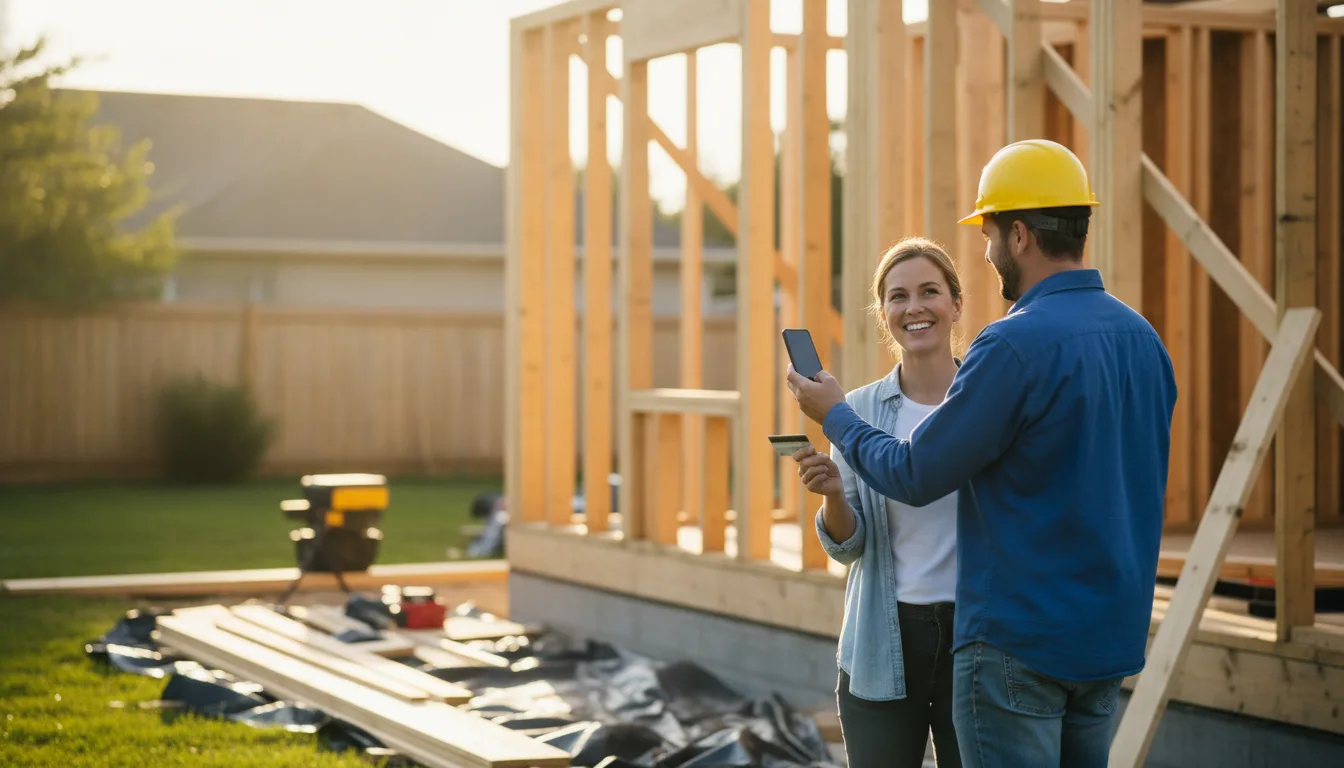
The simple way to take cards on a job
Send an invoice with a pay-online link. The customer opens it on their phone, picks card or bank payment, and pays. You do not wait on a check or drive back to the house to collect. The payment and the record of it end up in one place.
Other ways work too. Some contractors key in a card number over the phone. Others carry a card reader to the door. These are fine, but they leave more room for typos, lost slips and arguments about what was paid for. A link on the invoice ties the payment to the job, the amount and the date.
Whatever you pick, you need a payment processor. That is the company that approves the card and sends the money to your bank. Before you sign up, ask three things: what each payment costs, how many days until the money lands in your account, and how disputes are handled.
When to ask for a card payment
Do not wait until the job is done to ask for money. Match your payment requests to the work. A typical kitchen remodel might have a deposit at signing, a payment when cabinets arrive, a payment when drywall is finished, and a final payment at the walkthrough. A roof might be a deposit for materials and the balance on completion.
Each request should be its own invoice with its own pay link. The customer sees what the payment covers, and you get paid as the work moves. On longer jobs, progress billing keeps cash coming in so you are not paying for lumber, subs and fuel out of your own pocket.
Change orders matter here too. If the customer adds a tile upgrade or an extra circuit, get the change approved in writing and bill it clearly. Do not hide it inside the final invoice. Rules on deposit limits and payment schedules vary by state, so check your local contractor rules before you set your terms.
Make it easy for the customer to pay
Customers pay faster when paying is easy. Put your payment terms on the estimate, including that you accept cards and when deposits are due. Then nobody is surprised when the first invoice shows up.
Send each invoice the same day the work is done or the stage is reached. A late invoice feels like an afterthought, and the customer puts it at the bottom of the pile. Use plain line items such as demo and haul-away, rough plumbing, or tile install, not just a lump sum.
A customer portal helps because the estimate, the approved changes, the invoices and the pay buttons sit in one place. The homeowner does not have to dig through old texts and emails to find what they owe.
Card fees and how to handle them
Card payments cost money. The processor takes a fee on each payment, and on a large construction invoice that fee can be real money. Look at your processor's rates before you quote, and build the cost of doing business into your pricing the same way you do for insurance and fuel.
A common move is to offer bank payment, also called ACH, for big invoices and keep cards for deposits and smaller bills. Check your own rates to see which option costs less for you. Some contractors pass a card fee on to the customer as a surcharge. Whether that is allowed depends on your state and on card network rules, so check local rules before you add one, and show it clearly in writing if you do.
Avoid disputes and chargebacks
A chargeback is when a customer asks their card company to reverse a payment. On a big job that can hurt. The best protection is a clean paper trail. Keep the signed estimate, the written change orders, dated photos of finished stages, and invoices that say exactly what they cover.
Answer questions fast. Most disputes start when a customer does not understand a charge and nobody explains it. If a customer calls about an invoice, walk through the line items and point to the approved estimate or change order.
None of this is legal advice. If you have a payment dispute that will not go away, talk to your processor and consider local legal help.
Cards for recurring work
If you do repeat work such as lawn care, pest control, pressure washing or cleaning, ask the customer to save a card or bank account for autopay. The visit happens, the invoice goes out, and the payment runs on the agreed schedule. Get the customer's okay in writing first, and tell them how to update their card or stop service. That saves you from chasing small invoices every month.
Questions people ask
Can contractors accept credit cards?
Yes. You need a payment processor that approves cards and deposits the money in your bank. Most contractors send an invoice with a pay-online link, so the customer pays from a phone or computer. Compare what each payment costs, how fast you get paid, and how disputes are handled before you choose a processor.
Can I charge customers extra for paying by credit card?
It depends. Surcharging rules vary by state and by card network, and some places limit or ban it. Check your local rules and your processor's terms before adding a fee. If you do add one, show it in writing on the estimate. Many contractors build the cost into the price instead.
How do I take a credit card deposit before a job starts?
Put the deposit amount and due date on the estimate. When the customer accepts, send a deposit invoice with a pay-online link. The customer pays by card or bank, and you have a dated record. Deposit limits can vary by state, so check local contractor rules.
Should large construction invoices be paid by card or bank transfer?
Both work. Card is fast and easy for deposits and smaller bills. Bank payment can cost less per payment on big invoices, so check your own processor rates. Many contractors offer both and let the customer choose, with larger balances steered toward bank payment.